

Your Chromosomes. Have you ever looked in the mirror and seen your mother’s eyes staring back at you? Or perhaps you’ve been told you have your father’s stubborn streak?
We readily accept that our physical traits our height, hair color, and the shape of our nose are passed down through generations. But what if the instruction manual for your life, encoded deep within your cells, dictates far more than just your appearance?
What if it secretly influences your personality, your habits, your fears, and even your preferences?
This intricate blueprint is housed within structures called chromosomes. Tucked away in the nucleus of almost every cell in your body, these thread-like structures are the master architects of your existence.
Your Chromosomes and facts.
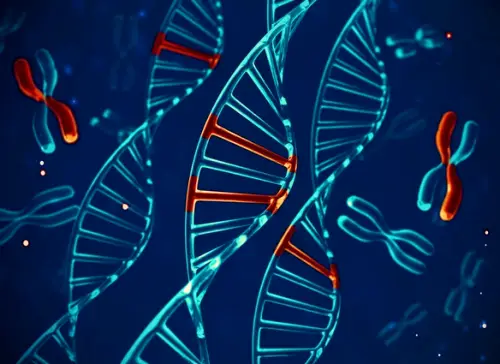
In humans, each cell contains 46 chromosomes, arranged in 23 pairs. Each chromosome is a tightly coiled molecule of deoxyribonucleic acid, or DNA, wrapped around proteins for stability.
This DNA contains the complete set of instructions for building and operating a human being. Think of it as a vast library, where each chromosome is a bookshelf, and the genes are the individual books, each containing a specific recipe or command for everything from your blood type to your potential for developing certain diseases.
While the inheritance of physical characteristics is well-understood, science is increasingly revealing that the influence of our genes extends into the most surprising corners of our lives.
It turns out that you might inherit more than just your grandfather’s smile; you could also inherit his temperament. Let’s explore the astonishing ways your genetic legacy shapes who you are.
The Warrior and the Worrier.
Your Genetic Grip on Self-Control.
We often associate aggression or impulsivity with a person’s upbringing or education. However, you might have inherited a genetic predisposition for how you react under pressure.
Scientists have identified a gene, often nicknamed the “warrior gene,” that influences how our brains process emotions during stressful situations.
Research, including studies by British scientists, has shown that this gene doesn’t necessarily make a person constantly angry or aggressive in daily life. Instead, its effect becomes prominent when an individual is provoked or placed under significant stress. In these moments, they might become more reckless, assertive, and emotionally charged than others.
What one person experiences as a manageable frustration, another, carrying this genetic variant, might perceive as a trigger for a full-blown confrontation. This isn’t an excuse for poor behavior, but rather a fascinating insight into how our innate biology can set the stage for our emotional responses.
The Roving Eye.
Is a Tendency to Cheat Written in Our Code?
Infidelity is a complex issue, often attributed to relationship problems, personal dissatisfaction, or a clash of temperaments. But what if a predisposition for it could be linked to our genes?
Researchers at Binghamton University have explored this controversial idea and found a compelling connection to our brain’s reward system.
The key player is a hormone called dopamine, often referred to as the “pleasure hormone.” It’s released during enjoyable activities, from eating a delicious meal to engaging in sexual intimacy, reinforcing these behaviors and motivating us to seek them out again.
When dopamine floods the brain, it’s picked up by specific receptors. However, due to genetic variations, some people have receptors that are less sensitive to dopamine.
For these individuals, a “normal” amount of stimulation might not provide a satisfying sense of reward. They may find themselves unconsciously seeking out novel and high-intensity experiences to get the same dopamine “hit” that others achieve more easily.
This drive for novelty can manifest in various ways, such as thrill-seeking sports, risk-taking behaviors, or, as the study suggests, a greater likelihood of engaging in infidelity.
This genetic variant appears to be more common in men, offering a potential biological clue to long-observed behavioral patterns.
The Genetics of the Open Road.
Why Some Drivers Are Better Than Others.
Have you ever wondered why some people seem to be natural-born drivers, while others struggle to parallel park or merge onto a highway?
While practice is crucial, your innate ability behind the wheel might have a genetic component.
Scientists at the University of California identified a gene called Brain-Derived Neurotrophic Factor (BDNF), which plays a vital role in brain plasticity, memory, and learning.
The BDNF gene helps maintain existing brain cells and supports the growth of new ones. This process is fundamental to acquiring and mastering new skills, such as driving a car.

The researchers discovered that people with a specific variant of this gene performed, on average, 20% worse on driving simulations.
They made more errors, had slower reaction times, and found it harder to remember and apply traffic rules. Even with repeated practice, the performance gap remained.
So, the next time a friend or family member struggles with their driving, remember that they might be contending with a genetic handicap that makes learning the complex art of driving just a little bit harder.
The Sleepless Gene.
Are Your Insomnia Woes Inherited?
Tossing and turning all night? While stress, a disruptive work schedule, or anxiety before a big event are common culprits for sleeplessness, chronic insomnia might be woven into your DNA.
If you’ve struggled with sleep for years, it’s possible you’re genetically predisposed to it.
A study conducted by the American Academy of Sleep Medicine revealed that insomnia can indeed be hereditary. By analyzing the genomes of thousands of people, they identified specific genetic regions linked to the condition.
These findings suggest that some individuals are simply born with a greater vulnerability to sleep disturbances. The research also confirmed a long-observed trend: women are more likely to suffer from genetically influenced insomnia than men.
This discovery opens the door to more personalized treatments for sleep disorders, moving beyond one-size-fits-all solutions.

Of Larks and Owls.
Your Genetically Programmed Internal Clock.
Are you the type of person who leaps out of bed at dawn, full of energy, or do you struggle to function before your third cup of coffee, coming alive only late at night?
Your chronotype whether you’re a “morning lark” or a “night owl”, feels like a fundamental part of your identity, and for good reason. It’s largely determined by your genes.
Geneticists have uncovered at least 15 different genetic variations that influence our internal body clock, or circadian rhythm. A massive study involving 90,000 people showed that while a single one of these genes has a minor effect, their combined influence powerfully determines whether you are naturally inclined to wake up early or stay up late.
This is why it can feel physically and mentally jarring for a night owl to force themselves into a 9-to-5 schedule that starts early in the morning. You’re not just fighting a habit; you’re fighting a deeply ingrained biological rhythm set by your ancestors.
The Sweet Tooth Gene.
Blame Your Parents for Your Sugar Cravings.
The battle against sugar cravings can feel like a test of willpower, but your genes might be tipping the scales against you. Scientists have identified a gene known as FTO, which has a significant impact on appetite and metabolism.
This gene can disrupt the body’s ability to feel full and simultaneously amplify the desire for high-calorie, sugary foods.
The FTO gene influences the hormones responsible for hunger and food-seeking behavior. People with a particular variant of this gene may not receive the “I’m full” signal as strongly as others, leading them to overeat.
Unfortunately, you can inherit this gene from either parent. If you inherit one copy, your risk of obesity increases by about 30%. If you inherit a copy from both parents, that risk skyrockets to 70%.
This genetic programming can make it incredibly difficult to resist the allure of sweets, turning a simple dietary choice into a daily biological struggle.
This is just a glimpse into the profound and often invisible influence of your chromosomes.
From your emotional resilience and sleep patterns to your driving abilities and dietary preferences, your genes lay a foundation for your life’s journey. However, it’s crucial to remember that genes are not destiny.
They are a predisposition, not a sentence. Your environment, your choices, and your lifestyle play a powerful role in shaping the person you become.
Understanding your genetic blueprint doesn’t limit you; it empowers you with a deeper knowledge of yourself, offering clues to your strengths, your challenges, and the unique masterpiece that is you.
Have a Great Day!
