
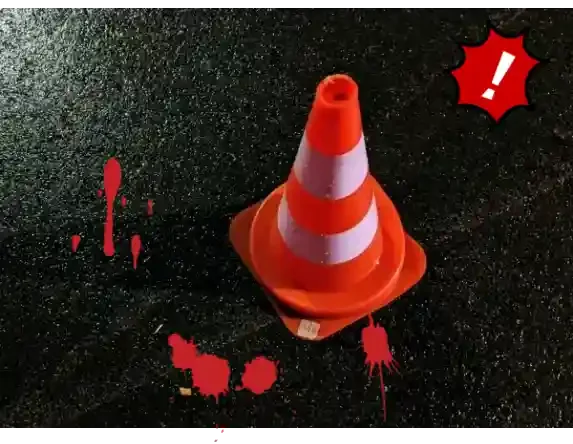
Traffic Accident and Scene of the Accident. A Moment of Shock! As the sudden jolt of the collision reverberated through the vehicle, a wave of disbelief washed over me.
My mind raced, grappling with the reality of what had just happened. The once tranquil street was now chaotic; the distinctive sounds of honking horns and desperate voices filled the air.
Vehicles were wedged together, metal crumpled in an alarming display of force.
Traffic Accident.
I quickly assessed my condition, relieved to find that I felt no immediate pain, yet a knot of anxiety tightened in my stomach.
Looking around, I noticed the other driver, their expression a mixture of shock and anger.
They were clearly flustered, a stark contrast to my composure, which I was desperately trying to maintain in the face of this unexpected crisis.
 I tried to recall the moments leading up to the accident. I had been obeying traffic signals, cautious of my surroundings, and yet here we were, both caught in a situation that felt surreal.
Bystanders began to gather, their concerned faces peering through the windows, reflecting the urgency of the scene.
Some offered help, while others merely watched, captivated by the unfolding event. The atmosphere was thick with tension as I struggled to comprehend my next steps.
- Was I hurt?
- Was my car salvageable?
Most importantly, how would this event impact my life moving forward? Surely, I was not at fault, yet the uncertainty loomed like a shadow over the scene.
In that moment, the mingling feelings of fear, confusion, and helplessness surged within me.
The minor traffic accident had transformed a mundane day into a pivotal event, underscoring the fragility of our routines.
I took a deep breath, reminding myself that staying calm was crucial, and silently prepared for the decisions that lay ahead amidst this reality I found myself in.
Cash Offer to Bypass the Police.
In the aftermath of a minor traffic accident, it is not uncommon for drivers to engage in discussions regarding the next steps.
However, a peculiar scenario arose when the other driver proposed a cash settlement to avoid involving law enforcement.
This unexpected approach raises a plethora of questions about the motivations behind such a decision.
His apparent reluctance to notify the police may have stemmed from several underlying factors, including potential guilt for causing the accident, fear of legal repercussions, or perhaps the absence of insurance coverage.
 Each possibility suggests a level of uncertainty that not only affects him but could also impact my own interests.
Upon receiving the cash offer, I experienced an immediate burst of conflicting emotions.
On one hand, the prospect of a quick resolution was appealing, it promised to save time and keep the matter out of the courts.
Accepting cash could lead to immediate compensation for any damage sustained to my vehicle, making it a tempting proposition.
However, the potential consequences of foregoing a police report loomed large in my mind.
Without an official record of the incident, I risked jeopardizing my ability to make a future claim, particularly if further issues arose or if my vehicle required significant repairs.
Moreover, accepting cash could imply an acknowledgment of responsibility, which may not align with the realities of the situation.
Thus, the offer presented a moral quandary as I weighed the practicality of bypassing the traditional reporting process against the rights that might be forfeited by doing so.
The decision required critical reflection on whether a short-term advantage could lead to long-lasting repercussions.
Ultimately, navigating this complex situation necessitated careful consideration of what course of action would ultimately safeguard my future interests.
To Accept or Reject the Offer?
When navigating a minor traffic accident, particularly when you are not at fault, one pivotal decision to make is whether to accept a cash offer from the other party involved or to insist on involving the police.
This decision can significantly impact the resolution of the incident and may have implications for your rights and liabilities later on.
Accepting a cash offer can seem attractive in the immediate aftermath of an accident, especially if the damages appear minor, comprising only some scratches and a small dent.
It allows for a quick resolution without the need for police intervention or insurance claims, which might expedite the process of getting your vehicle repaired. However, this action also carries potential risks that should not be overlooked.
One main concern is the possibility of hidden damages that are not apparent at first glance.
What may appear as minor scratches could potentially conceal more serious underlying issues that may become evident only after further inspection.
By accepting cash, you might forfeit the right to seek additional compensation should these hidden damages arise.
Additionally, failing to file a police report or an official accident record might lead to complications later, especially if the other party decides to contest liability.
Having an official report serves as a legal document that can provide vital information and support your case, should disputes arise.
Without it, proving your claim or asserting your rights could become significantly more challenging.
Ultimately, the decision to accept or reject an offer should not only be based on the present circumstances but also take into consideration the potential long-term ramifications of your choice.
Balancing the immediacy of resolution against the need for robust documentation and comprehensive accountability is crucial in ensuring that you make an informed decision.
Lessons Learned.
Experiencing a minor traffic accident can be overwhelming, but it also serves as an opportune moment to learn valuable lessons that can protect you in future incidents.
One key lesson emphasizes the importance of documenting every detail of the accident, regardless of its severity.
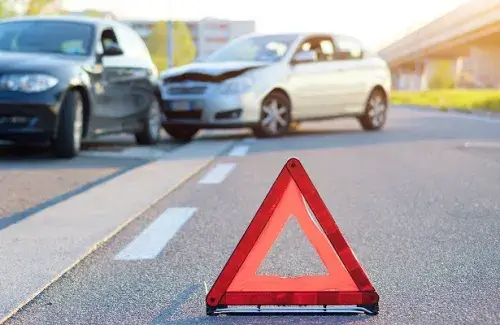 This documentation includes taking photographs of the scene, capturing license plates, and noting the conditions surrounding the event. By doing so, you ensure that there is a clear record that can be referenced later if disputes arise.
Moreover, patience and diligence play a crucial role when dealing with the aftermath of an accident.
It is advisable to remain calm and collected, allowing you to effectively assess the situation and communicate clearly.
Calling the police to file a report is imperative, as it provides an official account of the incident.
This report can serve as critical evidence when filing insurance claims or in legal discussions that may occur later.
In addition to proper documentation and police involvement, specific strategies should be implemented during minor accidents.
Gathering evidence should include both visual documentation and written statements from witnesses if possible.
Exchanging information with the other driver—such as names, contact information, and insurance details—is essential for smooth resolution processes.
Furthermore, understanding your rights as a driver can empower you in these situations.
Knowing what to expect and recognizing your entitlements can significantly contribute to managing the incident more effectively.
Ultimately, these lessons culminate in a more informed approach when navigating a minor traffic accident.
By being prepared and aware of your rights, you can effectively advocate for yourself and mitigate potential complications arising from such incidents.
General Steps (Applies Everywhere).
These are the immediate, universal actions you must take:
Ensure Safety and Stop: Stop your vehicle immediately. It’s illegal to leave the scene.
Turn on hazard lights.
If possible and safe, move the vehicles out of the flow of traffic to the side of the road.
Turn off the engine.
Check for Injuries:
Check yourself, your passengers, and anyone in the other vehicle(s). If anyone is seriously hurt, call emergency services immediately.
Call Authorities:
Contact the local police and/or ambulance if there are injuries, fatalities, significant damage, or if the road is blocked. (Crucial for insurance claims later).
Emergency Numbers:
Europe (EU): 112
US: 911
Many parts of Asia use 911 (e.g., Philippines, Taiwan) or other specific numbers (e.g., Japan: 110 for Police, 119 for Ambulance; South Korea: 112 for Police, 119 for Ambulance). Always check the local number before travelling.
Document the Scene.
Take photographs and videos of the damage to all vehicles, license plates, the road marks, traffic signs, and the overall position of the cars before they are moved (if local law permits waiting for the police).
Make notes on the time, date, location, weather conditions, and how the accident happened.
Exchange Information:
Exchange name, address, phone number, vehicle registration number (license plate), and insurance company details (policy number) with all other drivers involved.
If there are witnesses, get their names and contact information.
Do NOT Admit Fault:
Never admit fault or apologize at the scene, as this could negatively impact your insurance claim, even if you think you were to blame.
Contact Your Insurer.
Report the accident to your insurance company as soon as possible, usually within 24 hours, regardless of whether you plan to file a claim.
Specifics in Europe (EU/EEA)
The European Accident Statement (EAS), also known as the Constat Amiable in France or Blauwe Schijf in the Netherlands, is widely used.
Warning Equipment: Many European countries require you to place a warning triangle and wear a reflective vest when exiting your vehicle after a breakdown or accident. Failure to do so can result in a fine.
European Accident Statement (EAS): This is a standardized, multilingual form used by European insurance companies.
The drivers involved fill it out together at the scene. It’s designed to state the facts of the accident, not determine fault.
You and the other driver must sign it and each keep a copy. Only sign if you agree with the described facts and diagram.
Police Involvement: In some countries, police involvement is mandatory only if there are injuries, or if the drivers cannot agree on the facts, or in the case of significant damage. In other countries (like Poland or Germany, for severe accidents), a police report is often compulsory.
Specifics in the US.
The US system heavily relies on police reports and is guided by state-specific laws.
Police Report: It is highly recommended to call the police (911) for an official police report in all but the most minor ‘fender-bender’ accidents, as this report is critical for insurance claims and legal matters.
State Law Variation: Accident requirements, such as when you must report to the police or DMV (Department of Motor Vehicles), vary significantly from state to state.
“No-Fault” vs. “At-Fault”:
Some states operate under “No-Fault” insurance laws, meaning your own insurance pays for your medical bills regardless of who was at fault. In “At-Fault” states, the at-fault driver’s insurance pays. This affects post-accident procedures and claims but not the immediate on-scene actions.
Specifics in Asia.
Requirements vary greatly between countries, but the general need for a police report is often emphasized.
Mandatory Police Reporting: In many Asian countries (e.g., Japan and South Korea), all accidents must be reported to the police, regardless of the severity of damage or injury. Failure to do so can result in penalties.
Documentation: Clear and extensive photographic documentation is vital, as language barriers can complicate official reporting.
Insurance: Ensure you have the required local insurance or a valid Green Card (especially important if driving an imported or foreign-registered vehicle).
Language Barrier: If you do not speak the local language, try to find a translator or ask the emergency operator for an English-speaking officer.
Investing the time to learn from each experience can lead to safer driving conditions in the future.
Good Day You!
