
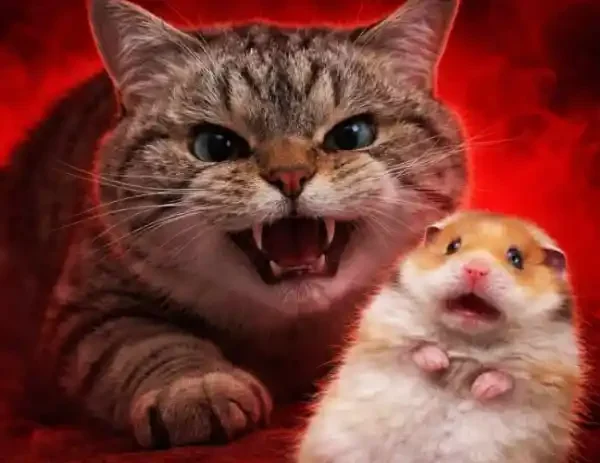
Hunt and Cat. For nearly 10,000 years, humans and cats have shared a bond that defines the domestic landscape. Today, we mostly see them as purring companions, professional nap-takers, and internet icons.
However, history tells a grittier story. The ancient inhabitants of the Near East didn’t invite these fluffy creatures into their homes for the company; they invited them for their lethality. In the dawn of agriculture, cats were the primary defense against pests that threatened grain stores.
But as it turns out, we have vastly underestimated our feline friends. While the common trope suggests cats are solely interested in mice, modern science reveals a much more complex and perhaps startling truth.
A recent comprehensive study has pulled back the curtain on the feline diet, proving that cats are among the most opportunistic and diverse predators on the planet.
Hunt and Cat, The Myth of the “Mouser”.
Many pet owners believe their cat’s hunting prowess is limited to the occasional unlucky mouse.
While rodents are indeed a staple, researchers at New Scientist and other ecological institutions have documented a staggering reality: domestic cats have been recorded hunting and eating over 2,000 different species.
This puts the domestic cat in a league of its own. They are not specialists; they are elite generalists. From the depths of the garden to the heights of the forest canopy, if it moves and is of a manageable size, a cat likely views it as a target.
1. Cat Is A Masters of the Air.
Birds as the Primary Target.
Birds hold the dubious honor of being at the top of the feline menu. Scientific records mention at least 981 different bird species targeted by cats. This includes common backyard inhabitants such as:
• Sparrows and Tits: Small, fast, and often ground-feeding, making them prime targets.
• Pigeons and Doves: Larger prey that provides a significant meal.
• Starlings and Robins: Birds that often forage in open lawns where cats can stalk them.
Birds that nest on the ground or low in the shrubbery are particularly vulnerable. For a cat, these creatures are not just food; they are a high-speed challenge that triggers a relentless predatory drive.
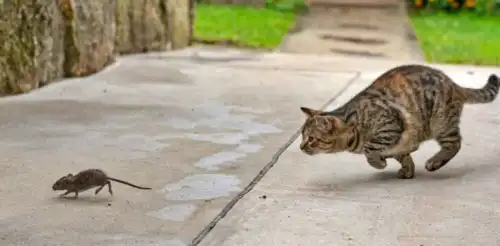
2. Hunt and Cat, Mammals Beyond the Mouse.
While mice and rats remain the “classic” prey, the feline hit list includes 431 species of mammals. This category reveals the cat’s surprising ambition. Beyond rodents, cats frequently hunt:
• Moles and Shrews: Tunneling mammals caught during their brief ventures above ground.
• Bats: Caught mid-air or while roosting.
• Hares and Rabbits: A significant physical challenge for a cat, yet one they often overcome.
• Large Prey Offspring: In some cases, cats have been observed hunting the young of much larger animals, demonstrating a lack of fear when it comes to size.
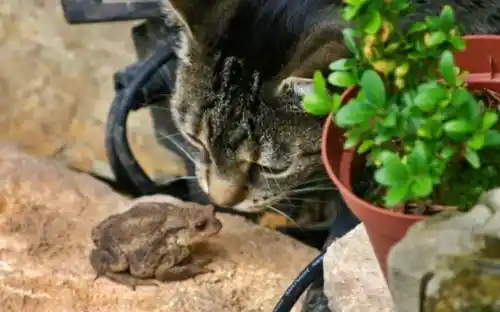
3. Cold-Blooded Encounters.
Reptiles and Amphibians.
In warmer climates, the feline diet shifts toward the cold-blooded. Research identifies 463 species of reptiles and 57 species of amphibians as feline prey.
• Lizards and Snakes: For a cat, the erratic, slithering movement of a reptile is an irresistible dinner bell.
• Frogs and Toads: Despite some species having toxic skin, cats often find ways to hunt them, especially in damp, tropical, or suburban garden environments.
4. The Micro-Predator.
Insects and Invertebrates.
Even the smallest creatures are not safe. Scientists have documented 119 species of insects consumed by cats. We have all seen a cat bat at a fly or pounce on a grasshopper.
While we often interpret this as “play,” it is frequently a predatory act. Beetles, butterflies, and crickets often end up as crunchy snacks.
Experts believe the true number of insect species hunted is likely in the thousands, as these small victims are often digested so quickly they leave no trace in traditional dietary studies.
The Ecological Toll.
Hunting Rare and Endangered Species.
Perhaps the most sobering aspect of the feline diet is its impact on biodiversity. Out of the 2,000+ species hunted, 347 are currently classified as threatened, near-threatened, or extinct in the wild.
Cats have played a role in the decline of several island-dwelling bird species and small marsupials. They are even known to target vulnerable hatchlings, such as Green Sea Turtles, which are defenseless as they make their trek from the nest to the ocean.
This makes the domestic cat not just a beloved pet, but one of the most significant invasive threats to global wildlife.
Why Do Cats Hunt Everything?
It is a mistake to think a cat only hunts when it is hungry. Evolution has hard-wired the feline brain to respond to movement. The sound of a wing flutter, the high-pitched squeak of a rodent, or the glisten of a lizard’s skin triggers an instinctive “kill-bite” reaction.
This is known as surplus killing. Because cats in the wild never knew when their next meal would come, their ancestors evolved to hunt whenever the opportunity arose. Your pampered house cat, despite having a full bowl of premium kibble at home, still operates on this ancient software.
“A cat’s hunting instinct is independent of its hunger. The thrill of the chase is a biological necessity.”
Can We Balance Domestic Bliss with Conservation?
The goal of recent research isn’t to demonize cats but to find a balance. To protect local ecosystems while keeping our pets happy, experts suggest several effective strategies:
• Indoor Living: Keeping cats primarily indoors significantly reduces their impact on local bird and mammal populations.
• Catios and Enclosures: These provide the outdoor experience (sunlight, fresh air) without the opportunity to kill wildlife.
• Bells and Bright Collars: Specific colorful collars (often called “Birdsbesafe”) make cats more visible to birds, giving the prey a split-second head start.
• Sterilization and Microchipping: Reducing the population of feral cats is the single most effective way to lower the number of wildlife victims.
Countries like Australia have already implemented strict “cat curfews” and zones where cats are prohibited from roaming to save their unique native fauna.
The Predator in Your Parlor.
Your cat may look like a harmless ball of fur when curled up on your sofa, but beneath that soft exterior lies one of nature’s most efficient and versatile hunters.
Their ability to adapt to almost any environment and prey on hundreds of different species is what helped them conquer the world alongside humans.
By understanding the true scope of what animals cats hunt, we can become more responsible owners and better stewards of the natural world.
Have a Great Day!
