
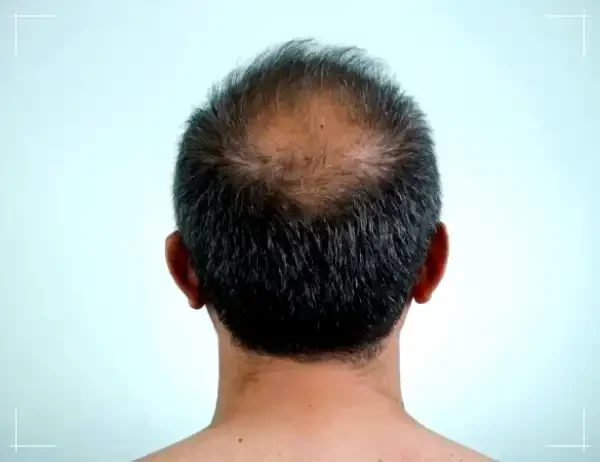
Hair Loss. For centuries, the quest to reverse baldness has been paved with empty promises, “miracle” tonics, and questionable supplements.
From ancient Egyptian concoctions of hippopotamus fat to the multi-billion dollar modern industry of foams and pills, humanity has been obsessed with reclaiming the crowning glory of a full head of hair.
Yet, despite our ability to map the human genome and land rovers on Mars, a permanent, biological “cure” for baldness has remained frustratingly out of reach.
That narrative changed recently. In a landmark achievement for regenerative medicine, an international team of scientists has managed to do what was previously thought impossible: they have grown fully functional, living hair follicles in a laboratory setting.
This isn’t just a temporary cosmetic fix; these follicles independently navigate the natural cycles of growth, regression, and rest—just like the hair currently on your head.
Hair Loss, Biological Complexity of the “Simple” Hair.
To understand why this is such a monumental breakthrough, we first have to dismantle the myth that hair is just a “string” growing out of a hole. In reality, a hair follicle is a complex, sophisticated mini-organ.
If you think of the human body as a grand architectural project, the hair follicle is one of its most intricate installations. It involves a constant, high-stakes communication between different cell types. Up until now, medical science struggled to replicate this “conversation” in a petri dish.
Hair Loss, Why Previous Efforts Failed.
For decades, researchers focused on two primary cell types:
1. Epithelial Stem Cells: These are the building blocks that form the physical structure of the hair shaft.
2. Dermal Papilla Cells: Think of these as the “engineers” or the “command center.” They send chemical signals that tell the hair when to grow and how thick to be.
Earlier experiments attempted to mix these two cell types together, hoping they would spontaneously organize into a follicle. While they occasionally produced something that looked like a hair, the results were biologically “dead on arrival.” These lab-grown hairs couldn’t regenerate.
They would grow once and then stop forever because they lacked the biological infrastructure to enter the telogen (resting) and anagen (growth) cycles. They were essentially bio-statues, not living organs.
The Breakthrough, “Three-Cell Recipe”.
The turning point came when a joint research team from the United States and Japan identified the “missing link” in the cellular recipe.
According to their findings, published in the prestigious journal Biochemical and Biophysical Research Communications, a two-cell approach simply wasn’t enough to trigger organ morphogenesis the process by which cells organize themselves into a functioning organ.
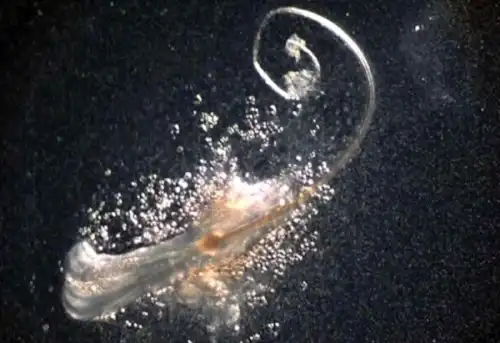
The researchers discovered that a third type of cell specifically those involved in the connective tissue and the specialized niche that supports regeneration—was the secret ingredient. By adding this third component, the researchers created an environment where the cells began to communicate effectively for the first time.
The Magic of the Cycle.
With this new “three-cell recipe,” the lab-grown follicles didn’t just sit there. They began to behave like biological machines. They underwent:
• Anagen: The active growth phase.
• Catagen: The transition phase where the follicle shrinks.
• Telogen: The resting phase before the cycle begins anew.
This is the “Holy Grail” of dermatology. If a follicle can cycle, it means it can sustain itself for years, potentially providing a lifetime of hair growth from a single procedure.
Why Is a Cure Taking So Long?
If we can edit genes and perform heart transplants, why has baldness remained such a stubborn adversary? The answer lies in the sheer scale and delicacy of human skin.
The “Mouse-to-Man” Gap.
It is a common joke in the scientific community that “we have cured everything in mice.” This study was conducted using mouse models, and while the biological principles are the same, the execution in humans is a much steeper mountain to climb.
• Duration: A mouse hair cycle lasts a few weeks. A human head hair grows for 2 to 7 years. Testing the longevity of these lab-grown follicles in humans will take a significant amount of time.
• Skin Architecture: Human skin is thicker, more complex, and has a different blood supply than mouse skin. Integrating a lab-grown organ into a human scalp without it being rejected or failing to connect to the blood vessels is a massive engineering hurdle.
The Numbers Game.
The average human head has roughly 100,000 hair follicles. Current hair transplant technology (FUE or FUT) works by moving existing follicles from the “donor area” (usually the back of the head) to the balding areas. It is essentially “robbing Peter to pay Paul.”
If we move to lab-grown hair, we face a logistics nightmare. Even the most skilled surgeons today can transplant about 2,000 to 4,000 grafts in a grueling 8-hour session.
To fully restore a head of hair using lab-grown follicles, we would need to manufacture and implant tens of thousands of mini-organs. This will likely require the development of robotic implantation or 3D bioprinting of skin patches already “pre-loaded” with follicles.
Beyond the Scalp.
The Future of Regenerative Medicine.
While the media focus is naturally on the “cure for baldness,” the implications of this research are far broader. This study is a masterclass in organogenesis.
If scientists can successfully “program” three types of cells to build a hair follicle, they can use similar logic to build other tissues. This work paves the way for:
• Skin Grafts for Burn Victims: Creating skin that actually has sweat glands and hair, making it much more functional than current synthetic options.
• Organ Repair: Understanding the signaling pathways between different cell types could eventually help us “regrow” parts of damaged internal organs.
• Advanced Aging Research: Hair loss is often the first visible sign of cellular aging. By mastering the hair cycle, we are essentially learning how to reset the “biological clock” of a specific organ.
The Current Landscape.
What Can We Do Now?
For the 800 million people worldwide suffering from androgenetic alopecia (male and female pattern baldness), lab-grown hair is the future, but what about the present?
Current gold-standard treatments remain:
1. Finasteride & Minoxidil: These are effective at slowing down the loss, but they don’t “regrow” dead follicles; they merely “resuscitate” dying ones.
2. Low-Level Laser Therapy (LLLT): Emerging studies suggest light can suppress certain hair-loss markers, but it’s rarely a standalone solution.
3. Hair Transplantation: The only current way to get hair where there is none, though limited by your existing “donor” hair.
The Road Ahead.
The researchers are optimistic but cautious. The next phase involves refining the “recipe” for human cells and beginning the long, regulated journey through clinical trials.
We are likely several years away from seeing “Hair Cloning Clinics” on the high street. However, for the first time in history, we aren’t just looking at a better shampoo or a stronger pill. We are looking at the birth of a brand-new organ.
“This is no longer a matter of ‘if,’ but ‘when,'” says the research lead. “We have the blueprint. Now, we just need to scale the factory.”
The “Holy Grail” is finally in sight. For millions of people, the dream of running their fingers through their own, biologically vibrant hair is moving out of the realm of science fiction and into the laboratory of reality.
Have a Great Day!
