
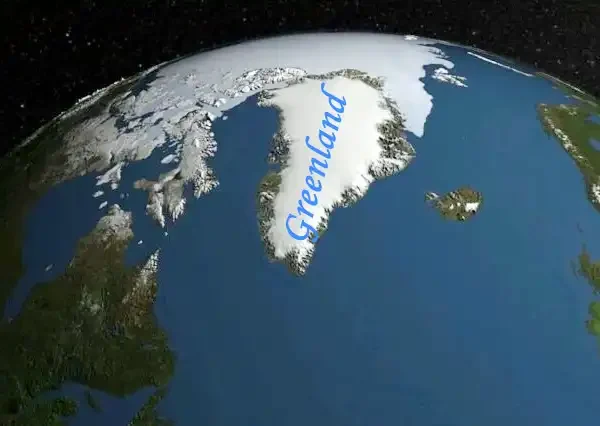
Greenland Island is the largest island on Earth and a true geographical paradox. Physically, it is a part of North America; politically, it belongs to Europe and it is washed by the waters of both the Atlantic and the Arctic Oceans.
Spanning over two million square kilometers, it nearly matches the scale of a continent, yet it retains the status of an island. But what makes this vast expanse of land so fundamentally different from anywhere else on the globe?
Greenland Island Beyond its sheer size and icy exterior.
Greenland stands apart because hidden beneath its monumental ice sheets lie some of the world’s richest reserves of natural resources.
It is a geological vault containing everything modern humanity is searching for: oil, gas, precious metals, and the rare earth elements essential for the electric vehicles, wind turbines, and advanced batteries of the future.
The challenge, however, is that most of these treasures are buried deep beneath a layer of ice that covers 80% of the island.
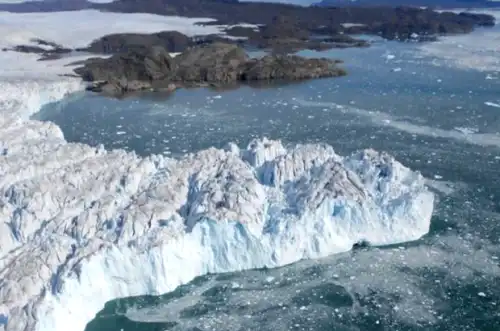
Greenland Island, Rare Earth Elements for Future Technologies.
The rare earth elements found in Greenland are a geological sensation. Beneath the ice lie massive deposits of neodymium and dysprosium, which are key materials for high-performance magnets, electric motors, and renewable energy infrastructure.
Scientists estimate that these reserves could satisfy more than a quarter of the entire future global demand. We are talking about tens of millions of tons, positioning Greenland as a potential number-one player in the global rare earth market.
As the world shifts toward a green economy, the value of this frozen treasure trove continues to skyrocket.
Oil and Gas.
An Energy Superpower in Waiting.
The potential for fossil fuels in Greenland is equally staggering. According to estimates by the U.S. Geological Survey, Northeast Greenland could hold approximately 31 billion barrels of oil equivalent.
To put that into perspective, this is comparable to the entire proven oil reserves of the United States. The onshore and offshore sedimentary basins are particularly promising, sharing a similar structure to the oil-rich Norwegian shelf. While extraction is currently limited by the extreme climate, shifting ice, and colossal logistical costs, the latent potential of Greenland’s energy sector is truly gigantic.
A Geological Tapestry Like No Other.
Greenland is unique because it has experienced almost every major geological process that creates natural wealth over the span of 4 billion years.
• Mountain-Building Eras: These periods gave birth to deposits of gold, rubies, and graphite.
• Crustal Rifting: Epochs of tectonic stretching left behind oil, gas, and metals.
• Volcanic Activity: Violent eruptions in the distant past deposited rare earth elements and diamonds.
Finding such a concentrated variety of resources in a single location is an extreme rarity, even on a planetary scale. It is as if the Earth used Greenland as a safe-deposit box for its most valuable creations.
The World’s Most Ancient Rocks and Strange Finds.
Greenland is home to some of the oldest rock formations on the planet, with some samples dating back over 3.5 billion years. The island is a museum of planetary history. Explorers have discovered blocks of native iron the size of trucks and kimberlite pipes containing diamonds.
While diamonds are present, mining them remains an uphill battle due to the remote locations, the unforgiving Arctic climate, and a complete lack of industrial infrastructure. Greenland knows how to keep its secrets.
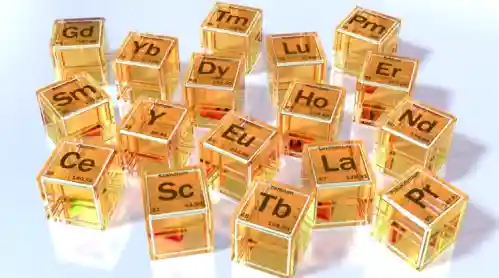
The Ice That Hides More Than It Reveals.
The ice-free portion of Greenland is nearly twice the size of the United Kingdom, yet this represents less than one-fifth of the island’s total territory. The rest is encased in a permanent ice cap that reaches several kilometers in thickness.
Researchers increasingly believe that even more undiscovered deposits are hiding in the “dead zones” beneath the ice. Modern technologies, such as ground-penetrating radar, now allow scientists to “see” up to 2 km through the ice, but exploration is slow and prohibitively expensive.
Every new survey suggests that we have only scratched the surface of what Greenland truly holds.
The Climatic Paradox.
Greenland is currently at the center of a strange and bittersweet irony. Its resources are becoming more accessible specifically because of the melting ice caused by global warming. Since 1995, an area of ice the size of Albania has vanished.
This creates a profound climatic dilemma: the very resources needed for green energy… technologies meant to fight climate change are becoming reachable because of the climate change they are designed to combat.
While resource extraction could provide a massive boost to the global energy transition, it simultaneously threatens the island’s unique ecosystems and the traditional way of life for its coastal communities.
Currently, the Greenlandic government maintains strict control over mining licenses, but international interest from superpowers like the United States continues to grow.
This is where Greenland differs from the rest of the world once again: it is a place where the future of the planet is literally lying under the ice.
Who Owns Greenland?
A History of Survival.
Greenland is an autonomous territory belonging to the Kingdom of Denmark, but its path to this status was paved by centuries of exploration and hardship.
The story began in the 9th century when Viking explorers from Iceland and Norway arrived on the western coast. They established settlements, but the brutal climate and isolation made survival a constant struggle.

By the 13th century, Greenland officially became part of Norway. Around the same time, the Inuit the indigenous people whose resilient culture remains the heart of the island today migrated to the territory.
In 1380, Norway entered a union with Denmark, and Greenland naturally fell under Danish influence. However, as the “Little Ice Age” took hold, conditions worsened, the Norse settlements vanished, and Greenland largely faded from the European radar.
It wasn’t until the 18th century that Danish missionaries and explorers returned to re-establish control. When Norway gained independence in 1905, it attempted to reclaim parts of the island, but the International Court of Justice eventually ruled in favor of Denmark, solidifying the status we see today.
Life on the Edge.
The People of Greenland.
Home to only about 56,000 people, Greenland is one of the most sparsely populated places on Earth. Most residents live in small coastal towns, with the capital, Nuuk, serving as the primary hub for nearly 19,500 people.

Despite its small size, Nuuk is a vibrant center for government, education, and modern culture.
Description… Primary Industry Fishing and hunting remain cultural and economic pillars.
New Frontiers…Tourism and mineral exploration are rapidly growing sectors.
Transport…There are virtually no roads between towns; travel is by boat, plane, or dog sled.
Life on the island is a blend of ancient tradition and modern struggle. While the standard of living is relatively high due to Danish subsidies, the community faces significant social challenges, including high rates of isolation-related accidents and health issues.
How to Reach the Frozen Frontier.
If you wish to visit this magnificent “treasure house,” your journey will likely begin in Denmark or Iceland. Regular flights to Greenland depart from Copenhagen and Reykjavik.
For travelers from the US, Canada, or the UK, the fastest route is usually through Iceland. The national carrier, Air Greenland, operates year-round flights from Keflavik International Airport directly into Nuuk.
It is a journey to the end of the world, where the silence of the ice hides the wealth of tomorrow.
Detailed Travel.
To truly experience the “Planet’s Treasure Trove,” a trip to Greenland requires careful planning. Since there are no roads between towns, your journey will be a mix of small-plane flights, coastal boats, and perhaps a helicopter.
The following itinerary focuses on Nuuk (the modern capital) and Ilulissat (the heart of the ice), providing the perfect balance between Greenlandic culture and its raw, geological majesty.
8-Day Expedition.
From Modern Capital to the Ancient Ice.
Days 1-2: Nuuk – The Pulse of the Arctic
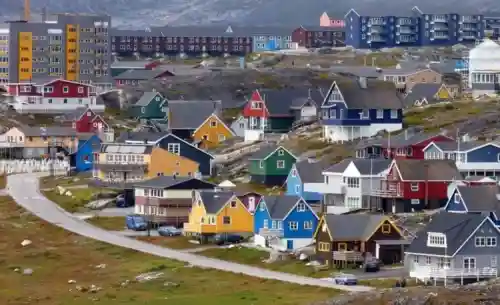
Your journey begins in Nuuk, a city where traditional wooden houses in bright primary colors stand alongside modern Nordic architecture.
• Arrival: Most travelers arrive via Air Greenland from Keflavik (Iceland) or Copenhagen (Denmark).
• The National Museum: Start here to see the famous Qilakitsoq mummies—naturally preserved 500-year-old hunters. It provides essential context on how humans survived here for millennia.
• Nuuk Fjord Safari: Take a boat tour through the second-largest fjord system in the world. Keep an eye out for humpback whales and the sheer rock faces that reveal the island’s 3.8-billion-year-old geological layers.
• Dining: Visit Sarfalik for a “New Greenlandic” culinary experience, featuring musk ox, caribou, and fresh-caught halibut.
Days 3-5: Ilulissat – The City of Icebergs.
A domestic flight north takes you to Ilulissat, located at the mouth of the Sermeq Kujalleq glacier—the most productive glacier in the Northern Hemisphere.
• The Icefjord (UNESCO World Heritage Site): Hike the “Blue Trail” along the coast. You will see icebergs the size of skyscrapers grounded in the bay, glowing in shades of turquoise and deep sapphire.
• Midnight Sun Sailing: If you visit between June and August, take a boat tour at midnight. The golden light hitting the massive ice sculptures is a photographer’s dream.
• Eqi Glacier Expedition: Take a day-long boat trip to the “Crashing Glacier.” You can sit safely at a distance and watch (and hear) massive chunks of ice calving into the sea with the sound of a cannon shot.
Days 6-7: Local Immersion & The Greenland Ice Sheet.
• Kaffemik: Experience a traditional Greenlandic social gathering. Local families often open their homes to visitors (arranged via local tour operators) to share coffee, cake, and stories.
• Helicopter to the Ice Cap: To truly understand the “treasure house” described earlier, take a helicopter excursion that lands directly on the Greenland Ice Sheet. Standing on ice that is 3 kilometers thick is a humbling realization of the island’s scale.
• Sermermiut Settlement: Visit the ancient Inuit settlement where different cultures (Saqqaq, Dorset, and Thule) lived for over 4,000 years.
Day 8: Final Farewells.
Spend your final morning at the Ilulissat Art Museum or shopping for local pilersuisoq (handicrafts). Look for carvings made from tupilak (reindeer antler or bone) or jewelry featuring Grønlandit a unique green gemstone found only on the island.

Essential Travel Logistics Advice.
Best Time to Go Summer (June-Aug): 24-hour daylight and boat access.
Winter (Feb-April): Northern Lights and dog sledding.
What to Pack? Layers are vital. Even in summer, temperatures hover around 5-10°C. Bring waterproof boots and “mosquito nets” for your head if hiking in July.
Currency. Danish Krone (DKK). Credit cards are widely accepted in Nuuk and Ilulissat, but carry some cash for smaller settlements.
Booking. Book flights and hotels at least 6 months in advance. Capacity is very limited.
Have a Great Day!

US President Donald Trump has demanded that NATO force Denmark to withdraw its troops from Greenland, saying that only the US can ensure the island’s security. The US president himself announced this on his Truth Social profile.
Trump said on his Truth Social platform that Greenland should be taken over by the United States. “Nothing less is acceptable,” he added.
Macron warned on Wednesday that any threat to the sovereignty of a European ally would have unprecedented consequences. France is closely monitoring the situation and said it will act in full solidarity with Denmark.
In my opinion, the whole point of these maneuvers is to increase the multinationality of the NATO contingent there.
That is, if the US chooses in favor of military annexation, then a confrontation would arise not only with Denmark, but also with the Nth other NATO member states.