

Dementia or the silence of Alzheimer’s disease is perhaps its most terrifying trait. For years, or even decades, a person can feel entirely healthy.
They go to work, enjoy dinners with family, and plan for the future, while surrounding friends and colleagues notice no deviation from the norm. Yet, beneath the surface, a biological storm is brewing.
Alzheimer’s is a master of deception; it begins to dismantle the intricate architecture of the brain long before the first lapse in memory or the first moment of confusion occurs.
By the time a diagnosis becomes undeniable, the pathological changes in the brain have often reached a point of no return. According to the Alzheimer’s Disease International association, approximately 55 million people worldwide were living with dementia in 2020.
This number is not just a statistic; it represents millions of fading identities and fractured families. However, a glimmer of hope has emerged from the laboratories of modern science. Humanity may finally have found a molecular key to unlock a door that has been closed for generations.
Dementia, The Staggering Statistics of Alzheimer’s.
To truly understand the urgency of this medical pursuit, one must look at the data. Every year, 10 million new cases of dementia are registered globally. This translates to a new diagnosis being delivered every three seconds.
We are living through a quiet pandemic that is accelerating as the global population ages. The economic impact is equally staggering. In 2015, the global cost associated with Alzheimer’s and related dementias was estimated at $818 billion.
Today, that figure has ballooned to approximately $1.3 trillion. If dementia care were a country’s economy, it would be among the top 20 largest in the world.
Yet, the personal price defies any economic calculation. Watching a loved one lose their connection to both their past and present is a unique form of grief. The gradual erosion of judgment, the loss of self-control, and eventually the inability to manage basic physical needs places a soul-crushing burden on families.
Statistics show that the responsibility of caregiving falls disproportionately on women, frequently leading to high rates of depression, anxiety disorders, and physical exhaustion among caregivers. For many, Alzheimer’s is a “double illness” one that claims the patient’s mind and the caregiver’s life.
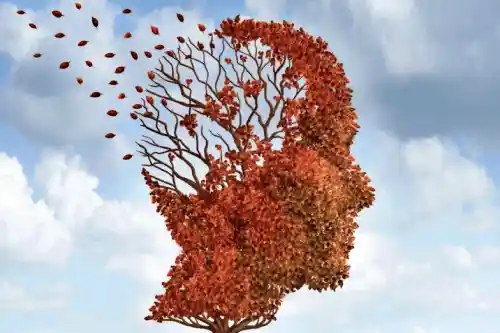
Alzheimer’s A Breakthrough in Treatment.
The NU-9 Molecule.
Recent research led by Northwestern University offers an incredibly promising perspective that could shift the paradigm from “managing decline” to “preventing destruction.”
Scientists have developed a small molecule known as NU-9, which possesses the potential to halt Alzheimer’s disease long before it begins to ruin lives.
“Alzheimer’s disease begins decades before symptoms appear,” explains Daniel Kranz, the lead author of the study published in the Journal of the Alzheimer’s Association.
The biological “villains” in this story are toxic amyloid-beta oligomers. These proteins begin to accumulate inside neurons, and glial cells the brain’s support system become reactive and inflamed years before a patient ever forgets where they put their keys.
The primary reason clinical trials have historically failed is timing. Because the disease has a long “silent period,” most patients only enter trials when their brain tissue has already suffered significant atrophy.
The Northwestern study changed the approach: NU-9 was administered during the pre-symptomatic window, effectively modeling a preventative intervention.
The Long Journey to Discovery.
The creation of NU-9 was not an overnight success but the result of fifteen years of meticulous labor. The molecule was invented by study co-author Richard Silverman, a renowned chemist who previously developed Pregabalin (Lyrica) for the treatment of fibromyalgia, nerve pain, and epilepsy.
Silverman, alongside Kranz and Alzheimer’s expert William Klein, spent years searching for or synthesizing a small molecule capable of preventing the aggregation of neurodegenerative proteins.
Their goal was to find a “cellular mechanic” that could fix the brain’s internal waste-disposal system.
By 2021, the team had already proven the efficacy of NU-9 in animal models of Amyotrophic Lateral Sclerosis (ALS), also known as Lou Gehrig’s disease.
The drug successfully cleared destructive proteins like SOD1 and TDP-43, effectively restoring upper motor neurons. This success was so significant that in 2024, the U.S. Food and Drug Administration (FDA) granted approval for NU-9 to move into clinical trials for the treatment of ALS.
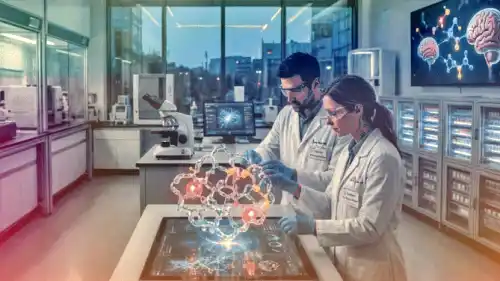
Can We Truly Cure Dementia?
In early 2025, Silverman’s team reached a new milestone. They demonstrated that when applied to the hippocampus—the region of the brain critical for learning and memory NU-9 could eliminate toxic amyloid-beta oligomers in lab-grown brain cells.
“Cells naturally possess a mechanism to rid themselves of these toxic proteins,” says William Klein. “However, this mechanism becomes damaged or ‘broken’ in degenerative diseases like ALS and Alzheimer’s. NU-9 acts by restoring the pathway that rescues the cell.”
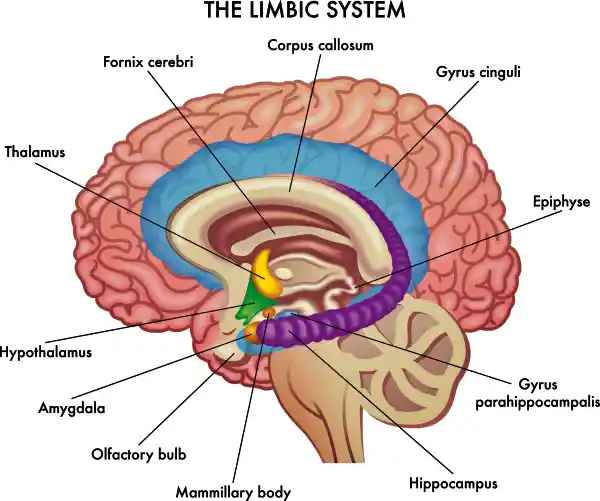
This “rescue” mechanism is the holy grail of neurobiology. Rather than simply masking symptoms, NU-9 empowers the brain to heal itself at a cellular level.
The Future Beyond the Lab.
The implications of a successful NU-9 treatment are vast. Beyond the scientific triumph, the societal shift would be monumental.
Successfully preventing dementia would not only free up trillions of dollars currently diverted to medical treatment and long-term care; it would reclaim trillions of hours currently spent in suffering, loneliness, and anxiety.
Imagine a world where the “golden years” of retirement are actually golden where seniors retain their wisdom, their memories, and their independence until the very end.
The eradication of Alzheimer’s would allow families to stay whole and permit caregivers to redirect their energy toward building communities rather than managing a slow goodbye.
As NU-9 moves through the rigorous phases of clinical testing, the world watches with bated breath. We are standing on the precipice of a medical revolution that could transform one of humanity’s greatest fears into a manageable, or even preventable, condition.
The molecule that can defeat Alzheimer’s is no longer a work of science fiction; it is a reality currently under the microscope, promising a brighter, clearer future for us all.
Have a Great Day!
