Christmas Tree. Every December, a quiet transformation takes place in homes across the globe. An ordinary evergreen tree is brought indoors and suddenly becomes the undisputed protagonist of the household.
We drape it in shimmering garlands, hang delicate glass orbs, and crown it with a star, often without pausing to ask: Why the tree? Where did this peculiar habit of bringing the forest into our living rooms originate?
While it feels like an eternal tradition, the history of the Christmas tree is a fascinating tapestry woven from pagan rituals, medieval theater, religious legends, and even Victorian marketing.
As we step into the holiday season of 2025, the tradition continues to evolve, blending deep nostalgia with a modern aesthetic of “Quiet Luxury” and “Coquette” charm.
Christmas Tree and Legend.
Why We Decorate Trees?
The journey of the Christmas tree began long before the first string of electric lights was ever plugged in. To understand why we do it today, we have to look back at the five most curious explanations of its origin.
The Symbol of Undying Life.
One of the oldest versions of this story dates back to the dawn of humanity. In ancient times, evergreen plants held a mystical significance. While the rest of the forest appeared to “die” during the harsh winter, firs and pines remained vibrantly green.
For pagan tribes, these trees were a powerful symbol of life that even death (winter) could not conquer. People decorated their homes with evergreen branches to ward off evil spirits, ghosts, and illnesses, believing the greenery would encourage the sun god to return. It wasn’t just a decoration; it was a ritual for survival.
The Medieval “Paradise Tree”.
In the Middle Ages, most people couldn’t read, so the Church used “Mystery Plays” to teach Bible stories. On December 24th, the feast day of Adam and Eve, a play was performed featuring a “Paradise Tree” (an evergreen) hung with apples to represent the Garden of Eden.
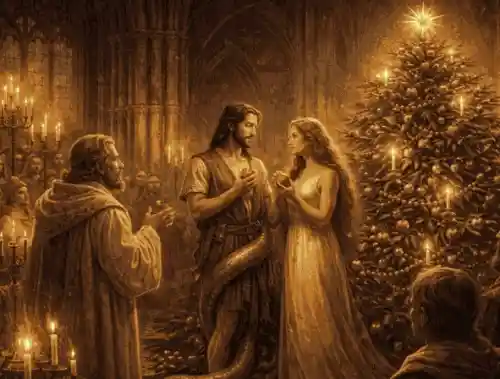
Over time, these trees moved from the church courtyard into private homes. The red apples used in these plays are the direct ancestors of the round red Christmas ornaments we use today.
16th Century Germany: Bringing the Magic Indoors.
While the tradition of outdoor ritual trees was old, the habit of putting a decorated tree inside the home solidified in 16th-century Germany.
Families began to adorn their trees with wafers, sweets, and paper roses. It was here that the tree transitioned from a communal religious symbol to a private, family-centered celebration of joy and abundance.
The Legend of Martin Luther.
The First Lights.
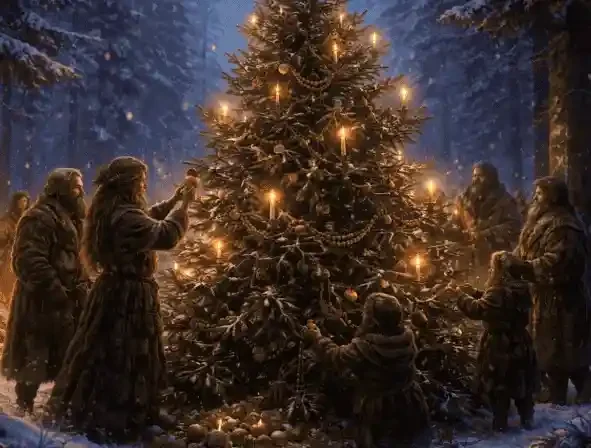
According to a popular (though historically debated) legend, the Protestant reformer Martin Luther was walking home through a forest one winter evening. Looking up, he was struck by the beauty of the stars twinkling through the dark branches of the fir trees.
To recapture this magical sight for his family, he brought a tree into his main room and wired its branches with small candles. Whether true or not, this story explains why light the symbol of hope in the darkness became an essential part of the decoration.
From Apples to Glass.
The Birth of an Industry.
The shift from food-based decorations to the glittering industry we know today happened by accident. In the 19th century, a severe apple harvest failure in Europe left people with nothing to hang on their trees.
In the German town of Lauscha, skilled glassblowers stepped in, creating glass “apples” and nuts to save the holiday. These shimmering glass baubles were an instant hit, transforming tree decorating from a humble folk custom into a global fashion industry.
Christmas Tree Trends.
Aesthetics of the New Era.
As we look toward the 2025 holiday season, the way we decorate is shifting away from loud, plastic brightness toward something more intentional, tactile, and serene. If you are looking to refresh your home this year, here are the three major pillars of 2025 holiday decor.
Texture and “Quiet Luxury”.
The defining visual shift for 2025 is the “Quiet Luxury” aesthetic. This trend rejects “disposable” plastic decor in favor of high-quality, natural materials that feel grounded and timeless.
• Color Palette: Think earthy tones—terracotta, moss green, sand, and muted mushroom.
• Materials: We are seeing a surge in ornaments made from matte ceramics, hand-carved wood, linen, and even recycled paper.
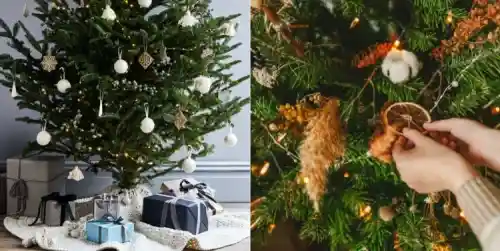
• Tactile Beauty: The goal is to create a tree that you want to touch. Imagine baubles with a “stone” texture, hand-painted botanical motifs, and accents like dried orange slices or wool felt stars. It’s about depth and sophistication rather than sheer brilliance.
The “Bow Tree” Phenomenon: 2025’s Most Romantic Trend.
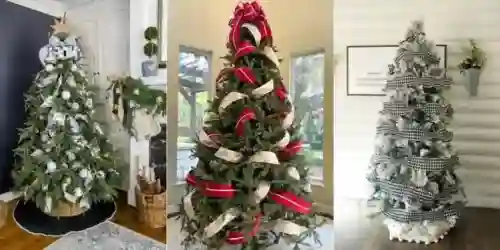
If 2024 was the year of the single “statement bow,” 2025 is the year of the Bow Waterfall. Influenced by the “Coquette” and “Grandmillennial” fashion movements, trees are now being covered in dozens of small, delicate bows instead of traditional tinsel.
• Materials: Velvet, silk, and vintage lace ribbons are the top choices.
• Styling: One popular 2025 technique is the “Ribbon Waterfall,” where long, flowing strands of silk are tucked into the top of the tree and allowed to cascade down to the floor in soft waves. This creates a sense of movement and makes the tree appear taller and more ethereal.
New Nostalgia: The 90s Revival.
For those who find “Quiet Luxury” a bit too muted, 2025 brings a vibrant return to Traditional Nostalgia. This trend draws inspiration from 1980s and 90s family albums.
• The Look: Classic red and gold, vintage glass pinecones, nutcracker figures, and strings of beads.
• The Twist: Modern decorators are mixing these retro elements with 2025 textures. For example, you might pair your grandmother’s vintage glass ornaments with modern matte ceramic balls or tiny velvet bows to bridge the gap between the past and the present.
Lighting the Way: The Technology of Glow,
In 2025, lighting is no longer just a background element; it is the soul of the tree. The trend has moved away from harsh, flickering multi-color LEDs toward Ambient Light Scapes.
1. Warmth is Key: The most sought-after lighting is the “Extra Warm White” (around 2700K), which mimics the flickering, golden glow of real candlelight.
2. Micro-LED Strings: These “fairy lights” on thin copper wires are being wrapped deeply into the branches, lighting the tree from the inside out to create a magical, diffused inner glow.
3. Smart Lighting: 2025 sees the rise of “Scene-Based” lighting, where you can adjust the brightness and “breath” of your tree lights via an app to match the mood from a cozy movie night to a festive dinner party.
My Conclusion.
Whether your 2025 tree is a minimalist masterpiece of linen and wood or a maximalist explosion of vintage red and gold, the essence remains the same.
Every bauble, every bow, and every light is a small “hello” from the past a continuation of a ritual that has survived for centuries.
The Christmas tree is more than just decor; it is a living bridge between our history and our hopes for the future.
Have a Great Christmas!
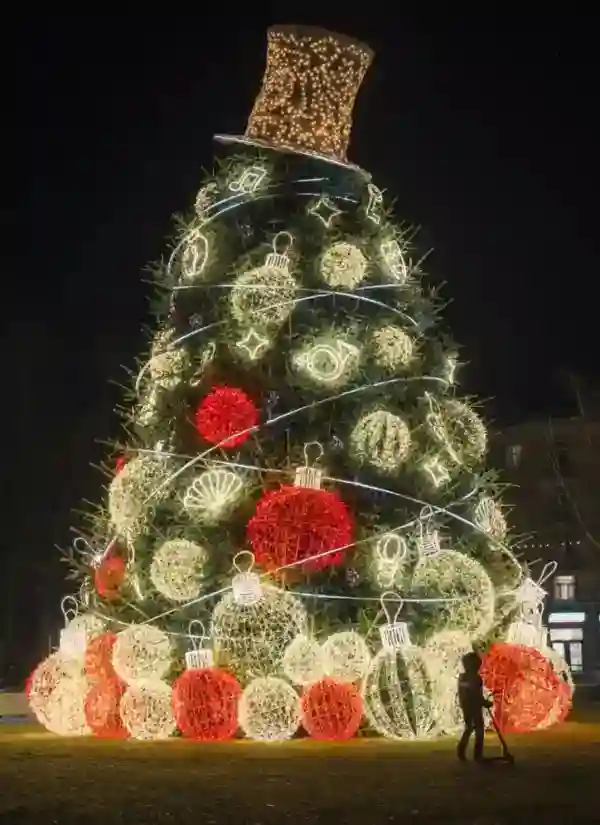
Christmas Tree in my City Liepaja