

Your Time. Yes, from Ancient Sundials to Cosmic Warps. We have all felt it that quiet, persistent anxiety as the clock ticks late into the night. “If only there were more hours in the day,” we whisper to ourselves, staring at an unyielding deadline or watching a beautiful moment slip away.
For some, time is a strict taskmaster; for others, it is a precious currency, a resource for which we are willing to sacrifice sleep, comfort, and peace of mind.
Yet, despite its constant presence in our lives, what exactly is time? We feel its flow, we measure its passing, and we watch its effects in the mirror. But the moment we try to grasp it, it slips through our fingers like fine sand. Is time merely a human invention to keep track of our busy days, or is it a fundamental fabric of reality itself?
To truly understand time, we must embark on a journey that begins with ancient civilizations tracking the stars and ends at the edge of black holes, where reality bends and time itself stands still.
Your Time or The Birth of the Calendar.
Ordering Cosmic Chaos.
Before there were ticking clocks or digital screens, humanity looked upward. Our relationship with time began as a survival mechanism. To plant crops, predict floods, and prepare for harsh winters, our ancestors needed to decode the rhythms of the cosmos.
The earliest attempts to organize time resulted in the calendar. Early civilizations observed two primary cycles: the phases of the Moon (lunar) and the changing positions of the Sun (solar).
The Sumerian and Egyptian Breakthroughs.
The ancient Sumerians developed one of the earliest known calendars, heavily relying on the lunar cycle. However, because a lunar year is roughly 11 days shorter than a solar year, lunar calendars quickly fell out of sync with the agricultural seasons.
The ancient Egyptians solved this by creating the first solar calendar. They noticed that the annual flooding of the Nile River crucial for their agriculture coincided with the heliacal rising of the star Sirius.
They calculated the year to be exactly 365 days long, dividing it into 12 months of 30 days each, with five epagomenal (intercalary) days added at the end of the year for celebration.

The Problem of the Leap Year.
The universe, however, does not operate in neat, whole numbers. A true solar year the time it takes for Earth to complete one full orbit around the Sun is actually about 365.2422 days.
If ignored, those extra six hours accumulate. Over a century, the calendar would drift by nearly 24 days, shifting summer months into spring.
To fix this, Julius Caesar introduced the Julian calendar in 46 BCE, implementing the concept of the Leap Year adding one extra day every four years. Even this wasn’t perfect. The Julian calendar overcorrected by about 11 minutes a year. By the 16th century, the calendar was ten days out of sync.
In 1582, Pope Gregory XIII introduced the Gregorian calendar, which fine-tuned the system by stating that century years (like 1700 or 1800) are not leap years unless they are divisible by 400. This is the incredibly precise system we still use today.
Slicing the Day.
The Invention of Hours, Minutes, and Seconds.
While calendars organized the seasons, tracking the passing of a single day required an entirely different kind of ingenuity.
Evolution of Timekeeping: Sundials (Solar Position) ➔ Water Clocks (Steady Flow) ➔ Mechanical Clocks (Gears & Escapements) ➔ Quartz & Atomic Clocks (Vibrations)
The division of the day into 24 hours goes back to the Egyptians and Babylonians. The Babylonians used a sexagesimal (base-60) numerical system.
This is the reason why our circles have 360 degrees, an hour has 60 minutes, and a minute has 60 seconds. It is a mathematical legacy thousands of years old.
From Sundials to Pendulums.
The earliest timekeeping devices were sundials, which tracked the movement of a shadow across a marked surface. But sundials had two major flaws: they were useless at night, and they didn’t work on cloudy days.
To combat this, ancient cultures invented clepsydras (water clocks) and hourglasses, which measured time through the steady, regulated flow of water or sand.
The true revolution in timekeeping came with the invention of the mechanical clock in medieval Europe. Controlled by weights and gears, these early towers rang bells to summon monks to prayer.
By the 17th century, Christiaan Huygens invented the pendulum clock, inspired by Galileo’s discoveries. Suddenly, timekeeping accuracy jumped from losing 15 minutes a day to losing just a few seconds.
The Marine Chronometer.
Navigating the Globe.
As global exploration boomed, accurate time became a matter of life and death. Sailors could easily calculate their latitude by the stars, but calculating longitude required knowing the exact time back at their home port. Standard pendulum clocks were useless on rocky, unstable ships.
In the 18th century, John Harrison, a self-taught English clockmaker, invented the marine chronometer. This highly precise, spring-loaded timepiece resisted the motion of the sea, allowing sailors to safely navigate the globe and changing world history forever.
The Psychology of Time.
The Mind’s Elastic Clock.
Have you ever noticed how an hour spent laughing with friends feels like five minutes, while five minutes spent waiting in a dentist’s chair feels like an eternity? This is the subjectivity of time perception.
While mechanical clocks tick at an unwavering, objective rate, our brains perceive time through a complex filter of emotion, memory, and attention.
- The Dopamine Effect: When we are engaged, excited, or happy, our brains release dopamine. This neurotransmitter speeds up our internal processing. Because our brain is processing information faster, the external world seems to fly by.
- The Fear Response: Conversely, during moments of extreme terror or danger—like a car accident—the amygdala (the brain’s emotional center) kicks into overdrive. It records memories with incredible density. When looking back at the event, the brain interprets this massive amount of data as though the event lasted much longer than it actually did, creating the illusion of slow motion.
- The Holiday Paradox: This phenomenon explains why a new holiday feels long while it is happening (because everything is novel and your brain is actively logging data), but feels short in retrospect. Meanwhile, a routine week at work passes quickly because the brain doesn’t bother saving repetitive data, making the memory of it feel like a blur.
Time and Physics.
Einstein Shatters the Absolute.
For centuries, science operated under Sir Isaac Newton’s view of the universe. Newton believed that time was absolute, uniform, and flowed at the exact same rate everywhere in the universe, regardless of who was watching. It was a comforting, commonsense idea.

Then came Albert Einstein, and he shattered it completely. The Constancy of Light and Time Dilation. In his 1905 Theory of Special Relativity, Einstein established two revolutionary principles:
The laws of physics are the same for all observers. The speed of light (approx 300,000 km/s) is absolute. It never changes, no matter how fast you are moving toward or away from its source.
To keep the speed of light constant for everyone, something else had to give. That “something” was time itself. Einstein realized that time is relative. It changes depending on how fast you are moving. This phenomenon is known as time dilation.
If you were to board a spaceship, accelerate to 99% of the speed of light, and fly through space for what felt like one year to you, you would return to Earth to find that decades had passed for your friends and family. To you, time moved normally; to the universe, you were moving through time in slow motion.
Spacetime and Gravity.
In 1915, Einstein took this further with General Relativity. He merged the three dimensions of space and the one dimension of time into a single four-dimensional fabric called spacetime.
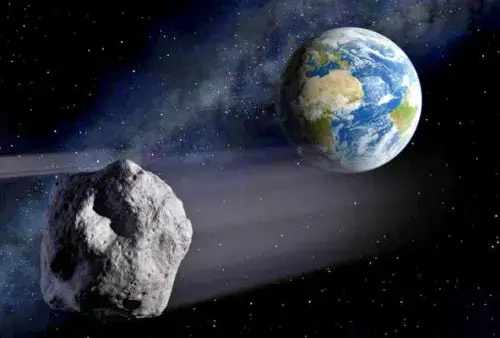
Massive objects like planets, stars, and black holes don’t just sit in space they warp the fabric of spacetime around them, much like a bowling ball resting on a trampoline. This warping is what we experience as gravity.
Crucially, gravity slows down time. The stronger the gravitational field, the slower time ticks.
- The Earth Example: Your head is technically older than your feet. Because your feet are closer to the center of the Earth, where gravity is stronger, time moves a fraction of a billionth of a second slower for them than for your head.
- GPS Satellites: This isn’t just theory; it’s a practical reality. Satellites orbiting Earth experience weaker gravity and move at high speeds. To keep their clocks synchronized with our phones, engineers must program them to constantly adjust for relativistic time differences. Without these adjustments, your phone’s GPS would lose accuracy by several kilometers every single day.
Cosmic Horizons.
Wormholes, Time Loops, and Paradoxes.
If time can stretch, warp, and slow down, can it break? Can it turn around? The physics of extreme space opens up mind-boggling possibilities for actual time travel.
Bending Time to a Halt.
As an object accelerates toward the speed of light, its mass approaches infinity, requiring an infinite amount of energy to go faster. Therefore, physical objects cannot reach or exceed the speed of light. If you could somehow hit that cosmic speed limit, time would stop entirely.
An even more extreme breakdown occurs at the boundary of a black hole, known as the event horizon. Here, the gravitational pull is so intense that the escape velocity exceeds the speed of light.
If you were to watch an astronaut fall into a black hole from a safe distance, you would see them slow down, freeze at the edge, and fade away. To them, however, they would plunge right through, entering a region where space and time switch places, and their inevitable future lies at the crushing singularity.
Wormholes and Time Loops.
According to some solutions of Einstein’s field equations, spacetime can be bent so severely that it forms shortcuts connecting distant parts of the universe. These hypothetical tunnels are called wormholes (or Einstein-Rosen bridges).
If the entrance of a wormhole moves relative to the exit, it could theoretically function as a time machine. An astronaut could enter one end and step out into the past or the future. This creates a closed timelike curve essentially a time loop.
The Paradoxes of Time Travel.
The moment physics allows for travel into the past, logic begins to scream. The most famous hurdle is the Grandfather Paradox:
If you travel back in time and accidentally prevent your grandparents from meeting, your parents would never be born, meaning you would never be born. But if you were never born, you couldn’t travel back in time to stop them in the first place.

How does the universe solve this? Physicists offer a few mind-bending theories:
- The Novikov Self-Consistency Principle: You can travel to the past, but you cannot change it. The universe will always self-correct. If you try to shoot your grandfather, the gun will jam, or you will miss. Your actions in the past were already a part of history all along.
- Parallel Universes (The Many-Worlds Interpretation): The moment you step out of your time machine in the past, you create a branching timeline. You are not in your own past, but rather in the history of a parallel universe. You can prevent your grandfather’s marriage there, but it won’t erase the home universe you originally came from.
Time and Memory.
The Human Anchor.
While physics treats time as a landscape of coordinates where past, present, and future exist simultaneously (a concept known as the “Block Universe”), humans are bound to experience it linearly. We are prisoners of the present moment, swept forward by the relentless current of entropy.
Our only weapon against this forward march is memory. Memory is our personal internal time machine. It allows us to re-experience the past and simulate the future.
Just as space and time are fundamentally intertwined on a cosmic scale, time and memory are intertwined on a psychological scale. Without memory, we would have no concept of time passing at all; we would exist in an eternal, disconnected “now.”
Our perception of who we are is built entirely on the records our brains keep as we drift through the mysterious, beautiful, and warped dimensions of time.
The next time you look at a clock, remember: you aren’t just looking at numbers. You are looking at an ancient human legacy, a psychological illusion, and a cosmic fabric that bends to the whims of the stars. Time is not just a tool to measure our lives; it is the ultimate canvas of reality.
Have a Great Day!
