
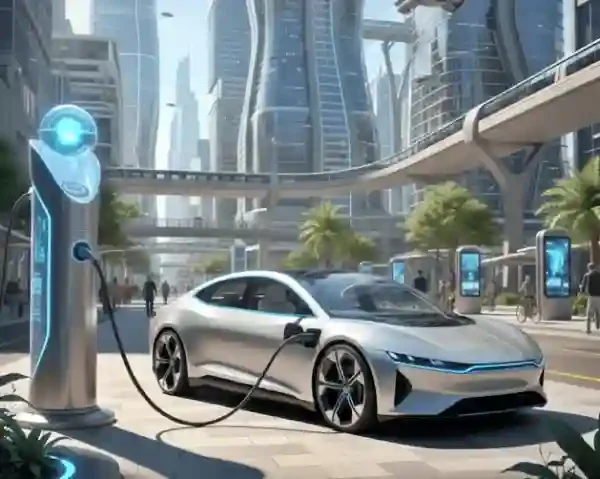
Electric car battery. The global shift from internal combustion engine (ICE) vehicles to electric mobility is no longer a futuristic concept it is a present-day reality.
Yet, for many prospective buyers and current owners, a nagging question remains: How long do electric vehicle batteries actually last?
Concerns about expensive battery replacements and “range anxiety” have long fueled skepticism. However, recent large-scale data suggests that the reality of battery health is much more optimistic than the myths suggest.
Electric car battery, Geotab Study.
Real-World Data vs. Speculation.
Since 2020, Geotab, a Canadian leader in fleet management and telematics software, has been meticulously tracking the health of electric vehicle (EV) batteries.
In their most comprehensive study to date, released in 2025, the company analyzed data from over 22,700 electric vehicles across 21 different makes and models.
The goal was simple: to move past laboratory simulations and observe how batteries degrade in the “wild”—subjected to varying climates, driving styles, and charging habits. The results were not shocking, but they were incredibly reassuring for the industry.
Electric car battery, How Fast Do EV Batteries Actually Degrade?
The 2025 study revealed a moderate average battery degradation rate of just 2.3% per year. To put this into perspective, if the wear remains relatively linear, an EV battery is projected to provide reliable service for 13 years or more.
Crucially, the researchers found no evidence of “planned obsolescence” or a sudden, sharp acceleration in wear as the vehicle ages. The degradation tends to be slow and steady.
However, it is vital to define what “end of life” means for a battery. A battery does not simply “die” like a smartphone that refuses to turn on; rather, its capacity to hold a charge diminishes.
In the automotive industry, a battery is typically considered “worn out” or unsuitable for primary driving when its State of Health (SoH) drops to approximately 70% to 75% of its original capacity.
Therefore, the 2.3% annual decline does not mean the car lasts 50 years—it means it provides over a decade of high-performance driving before the range becomes significantly limited.
Longevity and the Second-Hand Market.
After ten years of operation, the average EV still retains nearly 75% of its original capacity. This is an impressive feat, especially when compared to traditional mechanical engines that often require major overhauls after a decade of use.
According to data from insurance firm The Zebra, the average American car owner keeps their vehicle for about eight years. This means that for the first owner, the battery will likely outlast their period of ownership without any noticeable loss in daily utility.
However, a challenge persists in the secondary market. Because a battery replacement can cost as much as a small new car, the resale value of EVs can drop sharply as they approach that 70% threshold.
Buyers of used EVs are often wary of inheriting a vehicle that may soon require a massive capital investment, creating a “value cliff” that the industry is still working to address through better recycling and refurbishment programs.
Why Do Batteries Degrade?
The Culprits of Wear.
Not all batteries age at the same rate. Several factors influence how quickly an EV loses its “juice”:
- Charging Habits: This is perhaps the most significant factor. DC Fast Charging (Level 3) allows drivers to add hundreds of miles of range in minutes, but it comes at a cost. The high current generates significant heat, which stresses the battery’s chemistry. In contrast, Level 2 AC charging (home charging) is much gentler.
- Climate: Batteries are like humans—they dislike extreme temperatures. Consistently operating a vehicle in scorching heat or freezing cold accelerates chemical breakdown.
- Usage Patterns: Deep discharges (letting the battery drop to 0%) and keeping the car at 100% charge for long periods can also hasten degradation.
Interestingly, Geotab’s 2024 report showed a lower degradation rate of 1.8%. The jump to 2.3% in 2025 is attributed to two factors: a larger, more diverse data pool and the increased prevalence of high-speed public charging.
As more drivers rely on fast chargers rather than overnight home charging, the average wear across the global fleet has ticked upward.
The Environmental and Technological Edge.
From an ecological standpoint, the news is overwhelmingly positive. Data shows that electric vehicles begin to “break even” and reduce their total carbon footprint compared to gasoline cars after just two years of operation. As batteries last longer, this environmental “profit” only grows.
Furthermore, the horizon is bright with the emergence of semi-solid-state batteries. These next-generation power cells promise even greater energy density, faster charging with less heat, and significantly longer lifespans.
This technology could potentially push battery life far beyond the life of the vehicle’s chassis itself, helping EVs retain their residual value for much longer.
A Future of Reliable Power.
The data is clear: for the vast majority of drivers, the battery will not be the “weak link” of the electric vehicle. With an average loss of only 2.3% per year, modern EVs are more than capable of handling daily commutes and long-term ownership.
While the industry still needs to solve the pricing of battery replacements for the second-hand market, the technological trajectory is moving toward even more durable, sustainable, and efficient transport.
EV Battery Health Comparison (2025-2026 Data).
This table summarizes the average annual degradation and range retention after the first few years of ownership, based on reports from Geotab and Recurrent Auto.
| Vehicle Model / Brand | Avg. Annual Degradation | Range Retention (after 3 years) | Primary Battery Tech | ||||
| Hyundai (Ioniq 5 / 6) | ~1.4% | ~100% | Lithium-ion (NCM) | ||||
| Tesla (Model 3 / Y) | 1.5% – 1.8% | 96% – 98% | LFP or NCM | ||||
| Kia (EV6 / EV9) | ~1.5% | 96.2% | Lithium-ion (NCM) | ||||
| Volkswagen (ID.4 / ID.7) | ~2.1% | 94% – 95% | Lithium-ion (NCM) | ||||
| Ford (Mustang Mach-E) | ~2.2% | 93% – 94% | Lithium-ion (NCM) | ||||
| Nissan Leaf (2015-2022) | ~3.5% – 4.2% | 85% – 88% | Air-cooled Lithium | ||||
| BMW (i4 / iX) | ~2.3% | 92% – 93% | Lithium-ion (NCM) |
Key Takeaways from the Data
- The “Top Performers”: Hyundai and Tesla consistently lead the pack. Hyundai’s thermal management systems have shown exceptional stability, while Tesla’s LFP (Lithium Iron Phosphate) batteries, found in many Model 3 units, are praised for their longevity and ability to be charged to 100% frequently with minimal wear.
- The “LFP Advantage”: If you are looking for the longest-lasting battery, look for models with LFP chemistry. While they are heavier and hold slightly less energy than standard batteries, they can often last for 3,000+ charge cycles compared to the 1,000–1,500 cycles of standard NCM batteries.
- Active Cooling is Mandatory: Older models like the Nissan Leaf degrade significantly faster because they use “passive air cooling.” Modern EVs use liquid cooling (like a radiator for your battery), which is the single most important feature for preventing heat-related damage during fast charging.
- The “First Year Drop”: It is completely normal for a new EV to lose 3–5% of its capacity in the first year. This is the battery “settling.” After this initial period, the degradation usually slows down to a very stable 1–1.5% per year.
Pro-Tip for Used Buyers.
When looking at a used EV, always ask for the State of Health (SoH) report. Most modern cars allow a technician (or a Bluetooth OBDII dongle) to pull the exact percentage of remaining capacity. A car with 90% SoH after five years is considered in excellent condition.
Have a Great Day!
