
Trump’s Ambitions. The geopolitical chessboard is currently undergoing its most radical transformation since the end of the Cold War.
At the heart of this shift is a resurgence of “Great Power Politics” a world order where borders are fluid, and imperialist ambitions dictate the fate of smaller nations.
From the streets of Caracas to the icy shores of Greenland, the actions of U.S. President Donald Trump are not only reshaping Western alliances but are also providing Moscow with a complex set of risks and opportunities.
Trump’s Ambitions, Venezuela Crisis.
A Return to Spheres of Influence.
Russia has reacted with visible alarm to the arrest of its long-time ally, Venezuelan leader Nicolás Maduro. For years, the Kremlin has viewed Caracas as its primary ideological and economic foothold in the Western Hemisphere.
However, as noted by The Washington Post, Moscow’s anxiety is tempered by a cold, cynical realization. For the Kremlin, a U.S.-led intervention in Venezuela signals a return to a world where “might makes right” a system where imperialist powers dominate their regional spheres of influence without international repercussions.
This development is a double-edged sword for Vladimir Putin. On one hand, the loss of Maduro threatens billions in Russian investments and strategic oil contracts.
On the other hand, if Washington asserts control over its “backyard,” it provides a convenient precedent for Moscow to claim similar rights over its own “near abroad,” particularly in Eastern Europe and Central Asia.
The Oil Risk and the Quagmire Hope.
Analysts suggest that the Kremlin is meticulously calculating the risks of a sustained drop in global oil prices that would likely follow a U.S.-controlled Venezuelan energy market. Such a price collapse would be a devastating blow to the Russian economy.
However, there is a “silver lining” for Moscow. If the United States fails to secure a swift and total grip on Caracas, the Kremlin quietly hopes to see Washington mired in a prolonged, draining conflict in Latin America.
A “second Vietnam” for the U.S. in the tropics would sap American resources and political will, leaving Russia with more breathing room on the global stage.
The Ukraine Distraction.
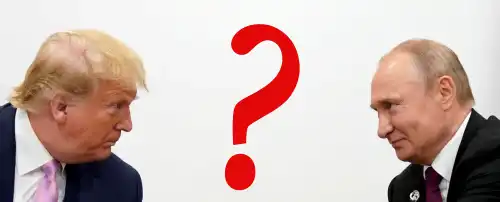
Perhaps the most significant benefit for the Kremlin regarding the Venezuelan upheaval is the shift in global focus. While the world watches the dramatic arrest of Maduro and the potential fallout in South America, the international community’s gaze has been averted from the ongoing aggression in Ukraine.
This distraction is vital for Putin. It allows the Russian regime to continue its defiance of Trump’s proposed peace plans for Ukraine with less scrutiny. By keeping the world’s media occupied with the chaos in the Americas,
Russia gains the silence it needs to solidify its positions and maintain its long-term objectives in the Donbas and Crimea.
The Battle for Greenland.
Trump’s Northward Expansion.
While the South is in turmoil, President Trump has turned his sights to the Far North. His renewed and aggressive push to annex Greenland an autonomous territory of Denmark has sent shockwaves through the European Union and the Nordic Council.
In Copenhagen, the streets have been filled with thousands of protesters. For the Danish people and the residents of Greenland, this is not merely a real estate transaction; it is a fundamental violation of sovereignty.
Yet, Trump remains undeterred, viewing the vast, resource-rich island as a strategic necessity for American dominance in the Arctic.

Trump’s Ambitions,Trade War as Diplomacy.
Terrorizing Europe.
In a move that many see as a direct gift to Putin, President Trump has begun using economic “terrorism” against his own European allies to achieve his territorial goals. On Saturday,
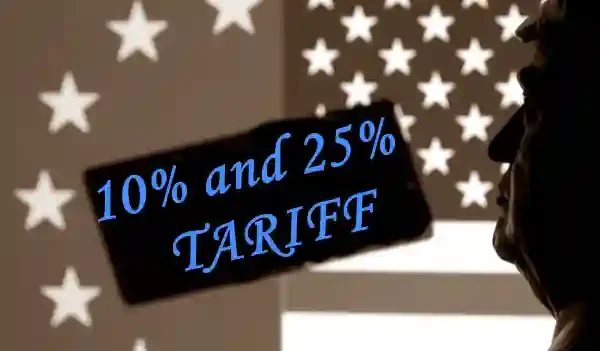
Trump announced a 10% customs tariff on several European nations, with an explicit threat to hike those duties to 25% unless a deal is reached for the U.S. takeover of Greenland.
Writing on his social media platform, Truth Social, the President confirmed that starting February 1, the following nations will be targeted:
• Denmark
• France
• Great Britain
• The Netherlands
• Norway
• Finland
• Sweden
• Germany
By imposing these tariffs on “all goods sent to the U.S.,” Trump is effectively holding the European economy hostage. This fracture in the Transatlantic alliance is exactly what Moscow has sought for decades.
A divided West, where the U.S. treats its allies as economic adversaries, leaves Europe vulnerable and creates a vacuum that Russia is more than willing to fill.
A World in Flux.
We are witnessing the erosion of the liberal international order. As the U.S. moves toward a policy of annexation and economic coercion, the traditional rules of diplomacy are being replaced by raw power.
For the Kremlin, the spectacle of Trump “terrorizing” Europe is a source of immense satisfaction. Every tariff imposed on Berlin or Paris, and every protest in the streets of Copenhagen, serves to weaken the unity of the West.
Whether it is the arrest of a dictator in Venezuela or the pursuit of ice-covered land in the Arctic, the new global reality is clear: the era of “Great Power” dominance has returned, and the smaller nations of the world are once again caught in the middle.
The specific economic impact these 10% tariffs might have on the European tech and automotive sectors?
The 10% tariff represents a significant escalation in what is becoming a “Transatlantic Cold War.” For Europe, the technology and automotive sectors are not just industries; they are the backbone of its economic sovereignty.
By targeting these specific areas, the Trump administration is striking at the heart of European prosperity.
The Automotive Sector.
A Collision Course.
The European automotive industry, particularly in Germany, Sweden, and Slovakia, is the most exposed to these new measures.
• Profit Margins at Risk: Analysts from institutions like KPMG suggest that major German car manufacturers could see their operating profits slashed by as much as 25%.
• Price Hikes for Consumers: For the American consumer, this geopolitical maneuvering translates to a direct cost. Estimates suggest the price of imported European vehicles could rise by up to $6,400 per car.
• Supply Chain Disruption: The 10% tariff doesn’t just apply to finished vehicles; it hits the critical components that cross borders daily—batteries, engines, and transmissions. Brands like Audi have already signaled a shift, with some even suspending imports to the U.S. entirely to avoid the financial bleeding.
The Technology Sector.
Caught in the Crossfire.
While the administration has selectively spared some “Big Tech” hardware like smartphones and semiconductors, the broader European tech landscape is under immense pressure.
• Regulatory Leverage: The U.S. is using these tariffs as a “stick” to force a rollback of the European Union’s Digital Services Act (DSA) and AI regulations. Washington views these laws as “attacks” on American companies like Google and Meta.
• Investment Stagnation: The uncertainty is chilling M&A (Mergers and Acquisitions) activity. Investors are now performing “tariff pass-through” due diligence, worried that any European tech firm with high U.S. exposure is a ticking financial time bomb.
• The “Trade Bazooka”: In response, the European Commission is considering triggering its “anti-coercion instrument.” This would allow the bloc to retaliate with investment bans and trade restrictions specifically targeted at U.S. digital interests a move that would effectively de-couple the Western tech ecosystem.
A Fracture in Alliances.
Beyond the numbers, these tariffs are a tool of political coercion. By specifically linking the economic health of nations like Norway, Finland, and Germany to the status of Greenland, the U.S. is treating NATO allies like transactional business partners.
For Moscow, this is the ultimate strategic victory.
As the U.S. and EU engage in a “trade bazooka” standoff, the collective security of the West erodes. The Kremlin no longer needs to actively subvert European unity when the White House is doing the work for them.
Have a Great Day!

The United States’ (US) military intervention in Venezuela and the capture of its authoritarian leader, as well as President Donald Trump’s desire to acquire Greenland, have seemingly revived the Monroe Doctrine.
Brrr
https://youtube.com/shorts/NOLDmplZ4fY?si=dHRU9NPVXPVh2oti