
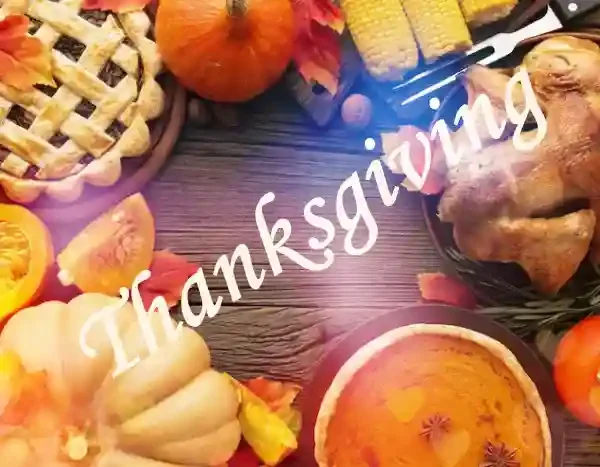
Thanksgiving is arguably the most quintessentially American holiday. It is a day that ostensibly transcends religion, class, and geography, centered on a universal human emotion: gratitude.
However, in the modern era, specifically in the tumultuous political climate surrounding figures like Donald Trump, the sanctity of this day is often tested.
To understand whether a single political figure or geopolitical stance can “spoil” the beauty of Thanksgiving, one must first understand what the day truly means to the American soul, and then examine how the current political anxieties intersect with the private sanctuary of the family dinner table.
Thanksgiving, Deep Meaning.
More Than Just a Meal.
For the average American, Thanksgiving is far more profound than a simple feast. It represents a secular spiritualism a pause in the relentless capitalist drive of American life to acknowledge the blessings of survival and community.
The Historical Roots of Resilience.
While the popular imagery involves Pilgrims and Native Americans sharing a meal in 1621, the deeper resonance of the holiday comes from its official establishment. It was President Abraham Lincoln who proclaimed Thanksgiving a national holiday in 1863, right in the middle of the Civil War.
At a time when the nation was tearing itself apart, Lincoln asked Americans to come together to give thanks with “one heart and one voice.”
Therefore, the foundational “deep meaning” of Thanksgiving is not just happiness; it is unity in the face of division. It is the stubborn insistence on finding something to be grateful for, even when the world outside seems dark or chaotic.
The Modern Pilgrimage.
Culturally, Thanksgiving is the day of “The Great Return.” It is the busiest travel time of the year. Children return to parents, and scattered siblings reunite. This physical journey home reinforces a psychological grounding. In a country that emphasizes individualism and career success,
Thanksgiving is the one day dedicated to the collective unit of the family.
The Ritual of Abundance.
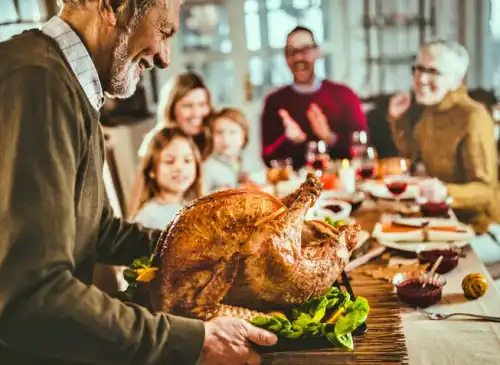
The food turkey, stuffing, cranberry sauce, pumpkin pie serves as a symbol of abundance. For many Americans, the table represents a safety net. No matter how difficult the year has been economically or personally, the Thanksgiving table is a place where, ideally, everyone is fed, and everyone is welcome.
The Political Shadow.
The “Trump Effect” on the Holiday.
The user asks a poignant question: Does President Trump, with his perceived unpredictability (“unconcrete decisions”) and controversial stance toward Russia, spoil the beauty of this day?
This question touches on a phenomenon that has intensified over the last decade: the intrusion of polarized politics into the domestic sphere. To answer this, we must look at the specific anxieties his leadership style evokes and how they manifest during the holiday.
The Anxiety of “Unconcrete Decisions”.
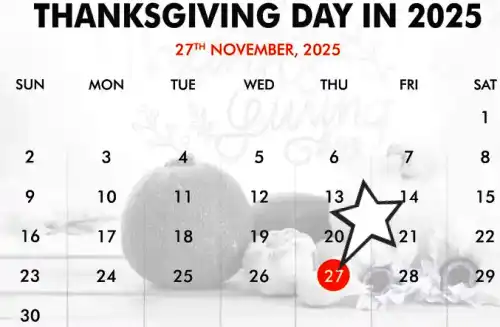
Stability is the bedrock of tradition. Thanksgiving is loved because it is predictable; it happens every fourth Thursday in November, the menu rarely changes, and the rituals are comforting.
In contrast, the political style associated with Donald Trump is often characterized by unpredictability. Whether it is sudden policy shifts via social media, changing tariffs, or erratic personnel changes, this lack of “concrete” direction creates a low-level hum of anxiety for many Americans.
• Economic Anxiety: If a family is worried about trade wars or inflation caused by unpredictable economic policies, the “abundance” on the table feels fragile.
• Social Anxiety: When leadership relies on divisive rhetoric, it emboldens division within families. The “unconcrete” nature of truth itself in modern political discourse makes it hard for family members to even agree on basic facts, leading to arguments rather than gratitude.
The Shadow of Russia and Geopolitics.
The prompt specifically highlights the concern regarding a “deep love for war-instigator Russia.” For Americans with roots in Eastern Europe, or for those who believe deeply in the post-WWII democratic alliance (NATO), an American President showing deference to an aggressor state is deeply unsettling.
• Moral Dissonance: Thanksgiving is about freedom and safety from persecution (echoing the Pilgrim story). If the leader of the free world is perceived as aligning with authoritarian regimes that suppress freedom, it creates a moral dissonance. How does one celebrate “American Liberty” while fearing that the country’s leadership is cozying up to tyranny?
• Global Instability: The fear of expanded war or the abandonment of allies creates an existential dread. It is difficult to feel “safe” at home a core Thanksgiving feeling if one believes the geopolitical order is crumbling due to a President’s foreign policy choices.
The “Turkey Table” Conflict.
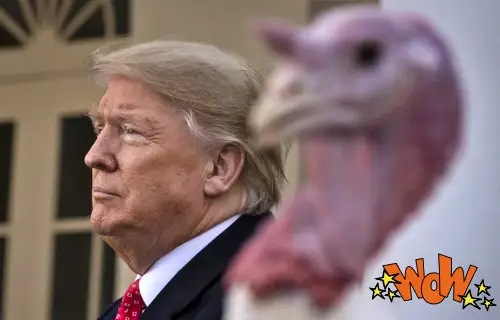
Does this actually ruin the day? For many, yes. The “Trump Era” has given rise to a new genre of journalism in America: “How to survive Thanksgiving with your family.” Because the President is such a polarizing figure, he becomes the elephant in the room.
• The Pro-Trump Relative: May see his “unconcrete decisions” as brilliant strategy and his stance on Russia as “peace through strength” or necessary pragmatism.
• The Anti-Trump Relative: Views these same actions as dangerous, chaotic, and morally bankrupt.
When these two forces meet over turkey and wine, the “sweetness” of the day can turn sour. The deep meaning of unity is fractured by the reality of political tribalism.
The anxiety regarding Russia is not just a policy debate; for many, it is a question of fundamental values. If one side believes the President is endangering national security and the other believes he is saving the country, gratitude becomes difficult to express collectively.
Why the Holiday Survives (and Why One Man Cannot Ruin It).
Despite the validity of these fears and the very real arguments that occur, the answer to “Does he spoil the day?” is ultimately no, provided the participants choose to protect the sanctity of the holiday.
Here is why the deep meaning of Thanksgiving is stronger than any presidency:
The Distinction Between State and Home.
Americans have a long history of separating the political from the personal. While the President occupies the White House, he does not occupy the dining room chair unless invited. The beauty of Thanksgiving lies in its localism. It is about this specific family, in this specific house.
By focusing on the immediate circle of love—the children playing, the grandparents resting, the food being shared—Americans can erect a mental wall against the chaos of Washington D.C.
Gratitude as an Act of Rebellion.
In times of uncertainty whether due to “unconcrete decisions” or geopolitical threats gratitude becomes a radical act. To celebrate Thanksgiving in a time of fear is an act of defiance.
It says: “The world may be unstable, policies may be confusing, and dangers may lurk abroad, but here, tonight, we are together, and we are okay.”
The Long View of History.
As mentioned, Thanksgiving became a national holiday during a Civil War. It survived the Great Depression, two World Wars, the Cold War, and massive social upheaval in the 1960s.
The American spirit is resilient. Presidents serve for four or eight years; the tradition of Thanksgiving has endured for centuries. The “deep meaning” is rooted in the endurance of the people, not the policies of the leader.
Conclusion.
A Choice of Focus.
To the American reader and the global observer, Thanksgiving remains a complex, beautiful, and sometimes difficult day. The deep meaning is found in the struggle to find unity despite differences.
While the concerns regarding Donald Trump’s leadership style his unpredictability and his controversial foreign policy stances are valid sources of stress that can permeate the holiday atmosphere, they only “ruin” the day if allowed to dominate the conversation.
The true power of Thanksgiving lies in its ability to force a pause. It challenges Americans to look across the table at their relatives, regardless of political affiliation, and recognize a shared humanity that is deeper than a ballot box and more enduring than any administration.
The “sweetness” of the day is not given by the President; it is created by the people, often in spite of him.
Have a Great Day- Thanksgiving!
